The story behind the silicon.
NVIDIA’s history is not a single leap from gaming to artificial intelligence. It is a sequence of changes in what graphics hardware could do, who could program it and which problems it could solve. These milestones trace that shift without treating its later success as inevitable.
This page gathers background and sources before the video is produced. It is not an announcement of a released video.
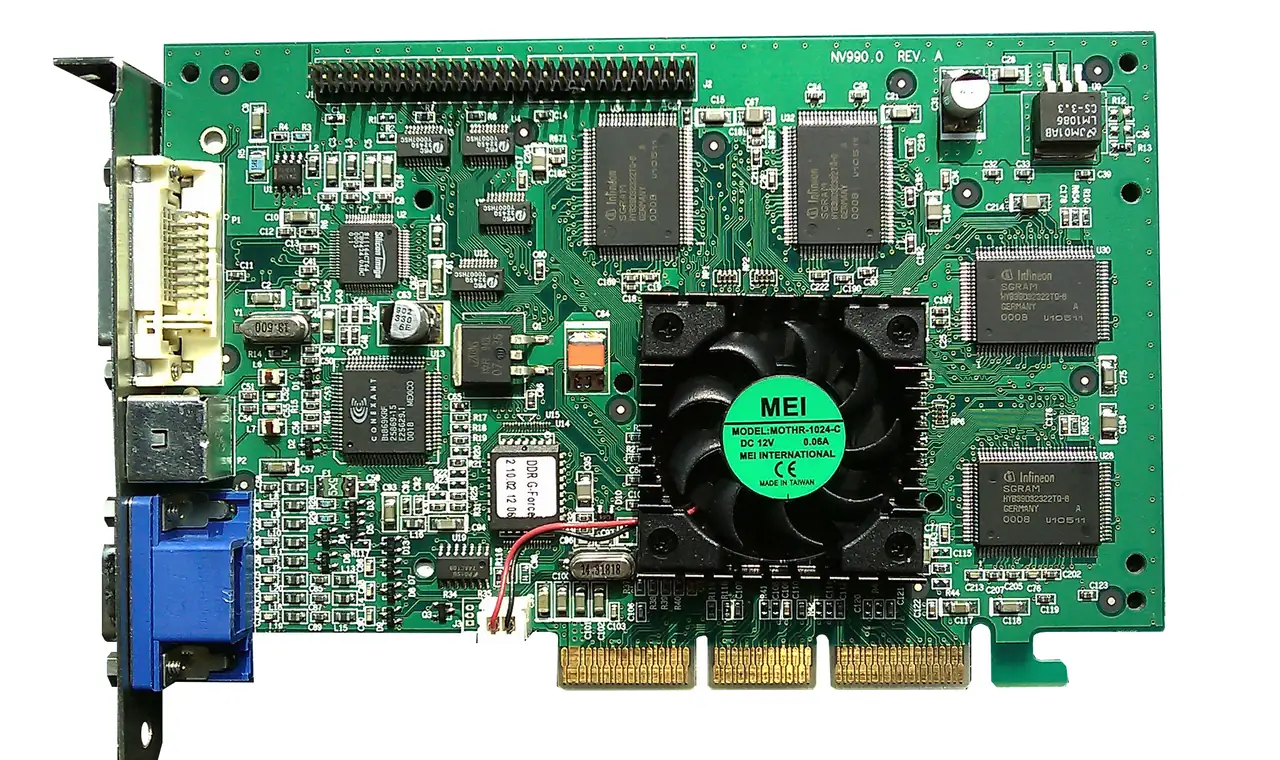
Hyins · Public domain · Source record ↗

Resized and compressed; no generative editing.
From graphics to accelerated computing.
- 1993
A company built around 3D graphics
Jensen Huang, Chris Malachowsky and Curtis Priem founded NVIDIA on April 5, with a vision to bring 3D graphics to gaming and multimedia markets.
Reference 1 ↗ - 1999
GeForce 256 arrives
NVIDIA introduced the GeForce 256, marketing it as the world’s first GPU. Hardware transform and lighting moved more of the graphics pipeline off the CPU.
Reference 2 ↗ - 2006–07
CUDA opens a broader path
NVIDIA dates the introduction of its CUDA architecture to 2006. CUDA Toolkit 1.0 followed in June 2007, helping developers use GPUs for general-purpose parallel computing.
Reference 3 ↗ - 2012
A breakthrough in image recognition
AlexNet won the ImageNet competition using a neural network trained on NVIDIA GPUs. The result became a landmark in the rise of deep learning.
Reference 2 ↗ - 2016
An AI system, not just a graphics card
NVIDIA’s DGX-1 brought eight GPUs together in an AI supercomputer. Jensen Huang delivered the first system to OpenAI in 2016, illustrating the GPU’s expanding role beyond graphics.
Reference 2 ↗
The visual record.
10 selected images for this video, from early graphics hardware to the Blackwell era. Tap an image for a larger view.
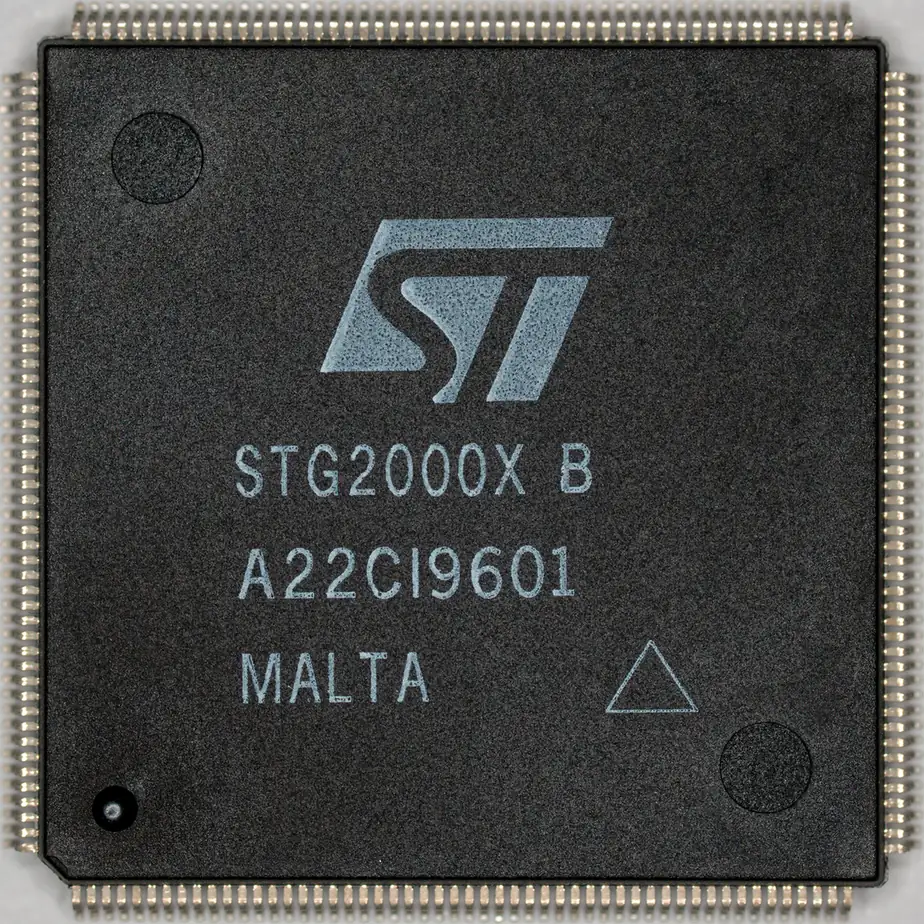
NV1: an early NVIDIA chip
Product family: 1995 · Photograph: 2019STG2000X-branded NV1 package. This later specimen illustrates the product family, not NVIDIA’s founding in 1993.
FritzchensFritz · CC0 · Source record ↗
Resized and compressed; no generative editing.Open larger image ↗
GeForce 256 DDR
Product family: 1999 · Photograph: 2010A VisionTek GeForce 256 DDR card. Product launch year is not the manufacture date of this specimen or the photo date.
Hyins · Public domain · Source record ↗Resized and compressed; no generative editing.Open larger image ↗
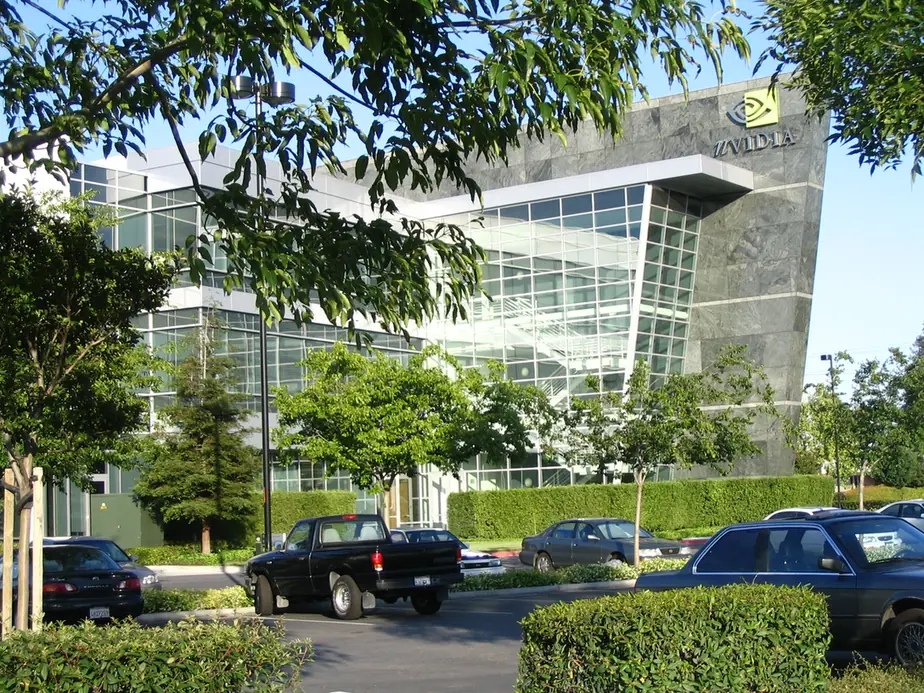
The old NVIDIA headquarters
Photographed: 26 May 2005The earlier San Tomas Expressway headquarters, before Endeavor. This is not the company’s 1993 first office.
Kevin McCarthy · CC BY 2.0 · Source record ↗Resized and compressed; no generative editing.Open larger image ↗
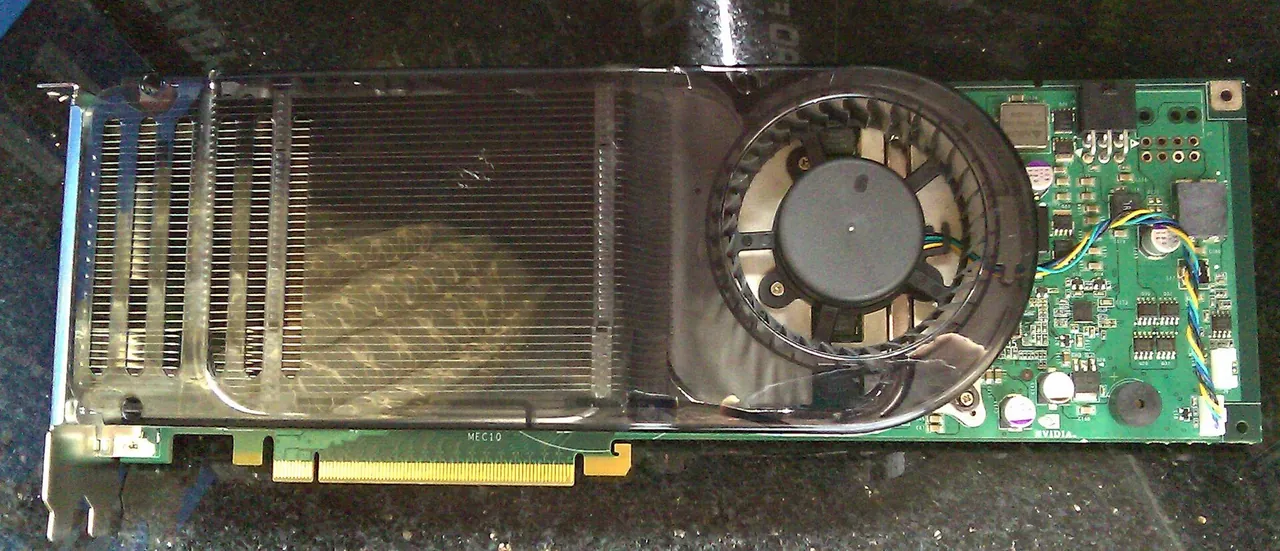
The early parallel-computing era
G80 era: 2006–07 · Photograph: July 2011A G80-era P350-A00 board associated with early Tesla/CUDA hardware. Exact retail model is not established; the source lists multiple related designs.
Hyins · Public domain · Source record ↗
Resized and compressed; no generative editing.Open larger image ↗

Jensen Huang at Computex
Photographed: 31 May 2010An archival presentation in Taipei, well after NVIDIA’s founding.
Masaru Kamikura · CC BY 2.0 · Source record ↗
Resized and compressed; no generative editing.Open larger image ↗
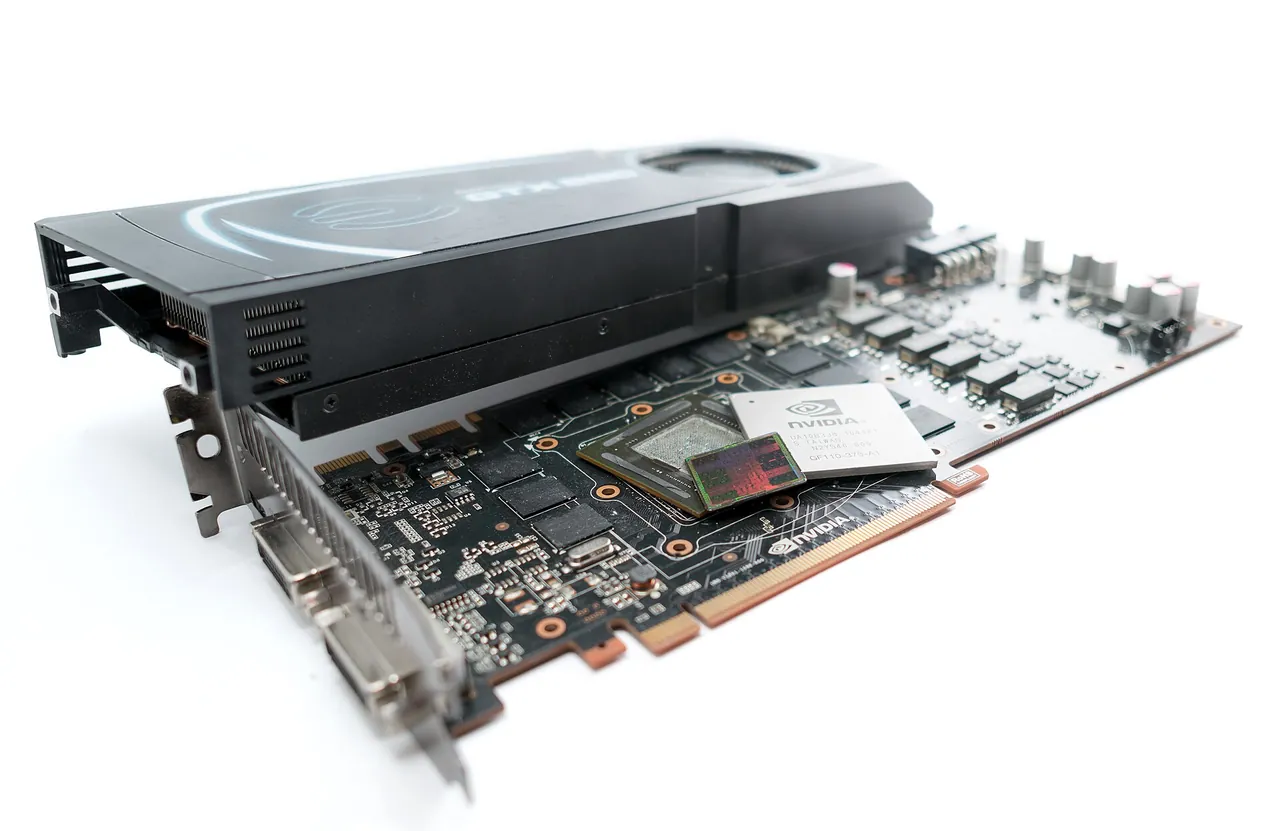
The hardware behind a breakthrough
Product: 2010 · Photograph: July 2016A disassembled GTX 580. AlexNet trained on two GTX 580 GPUs in 2012; this is illustrative hardware, not the original experiment.
Fritzchens Fritz from Berlin · CC0 · Source record ↗
Resized and compressed; no generative editing.Open larger image ↗
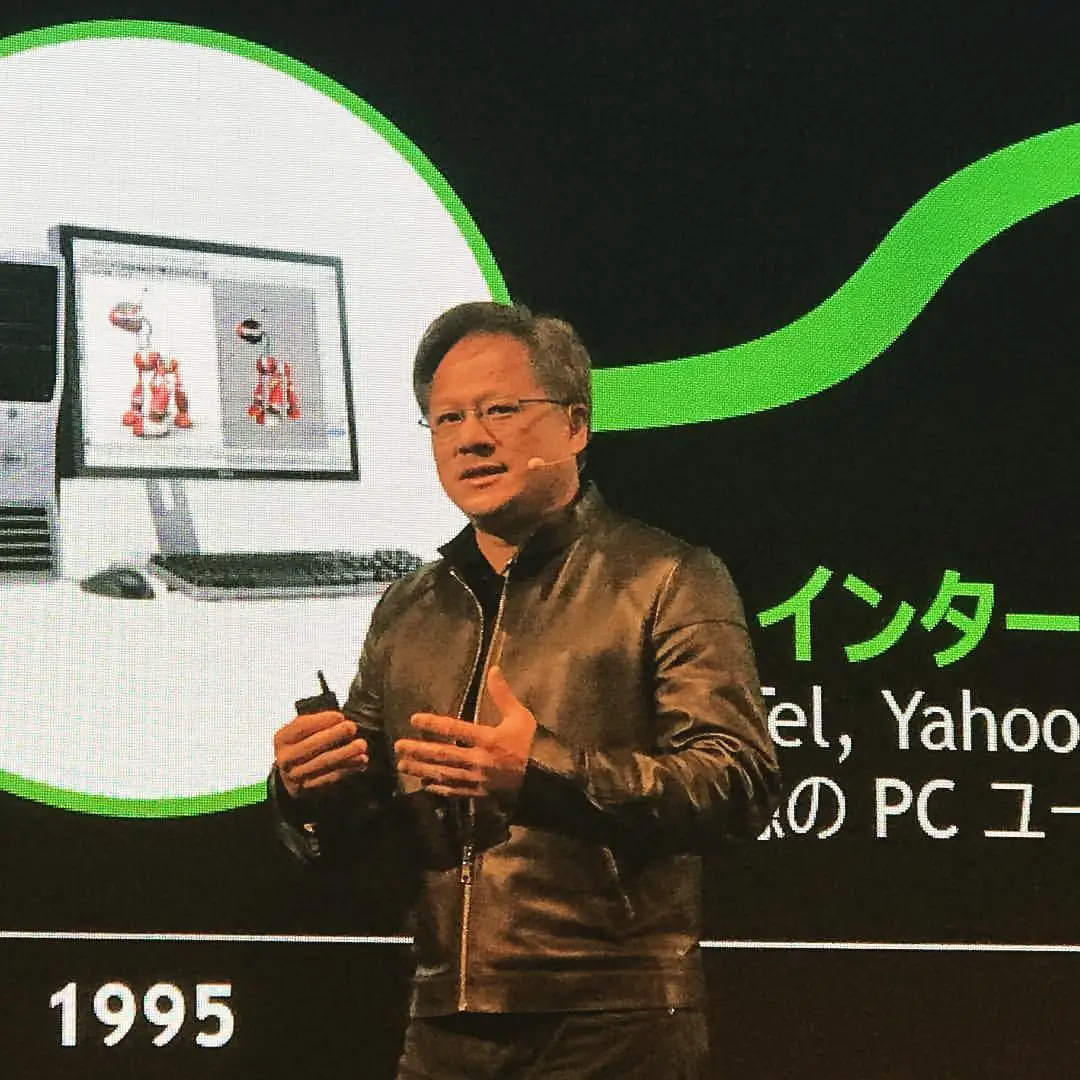
GPU computing takes the stage
Photographed: 5 October 2016Jensen Huang speaking at GTC Japan. A historical year visible in a slide is not the photograph date.
Masaru Kamikura · CC BY 2.0 · Source record ↗
Resized and compressed; no generative editing.Open larger image ↗
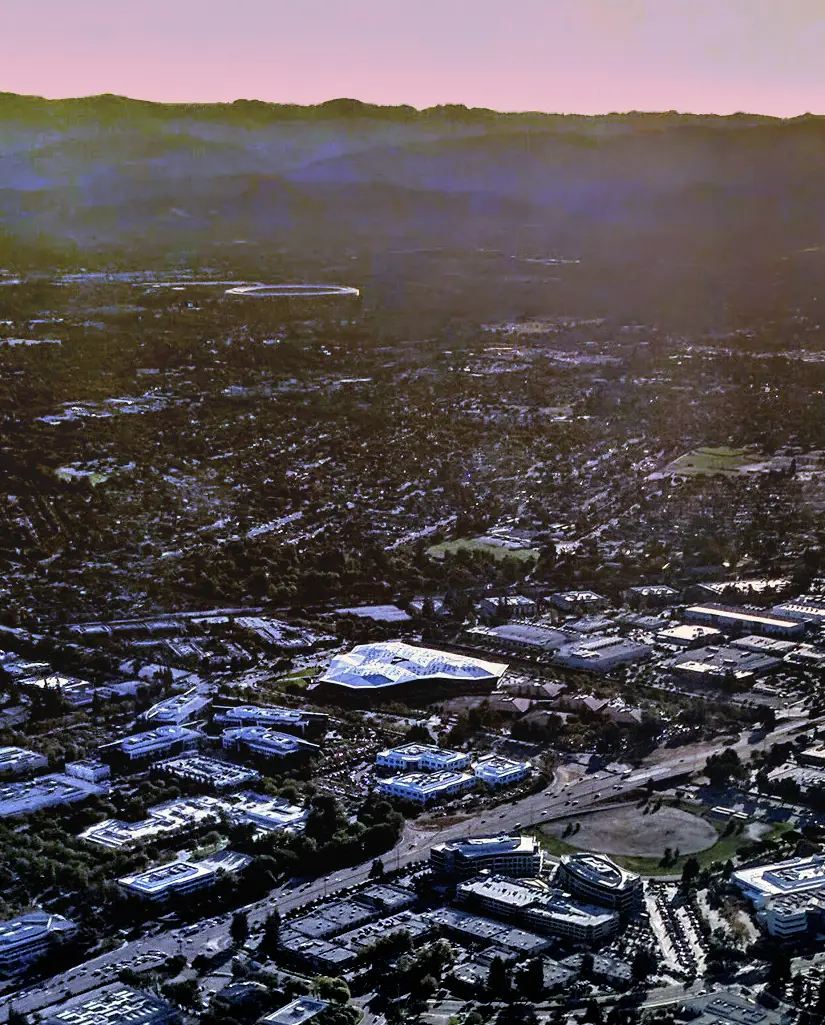
A growing campus
Photographed: 5 October 2017An aerial view of NVIDIA’s campus in Santa Clara; not its original office.
Dicklyon · CC BY-SA 4.0 · Source record ↗
Resized and compressed; no generative editing.Open larger image ↗
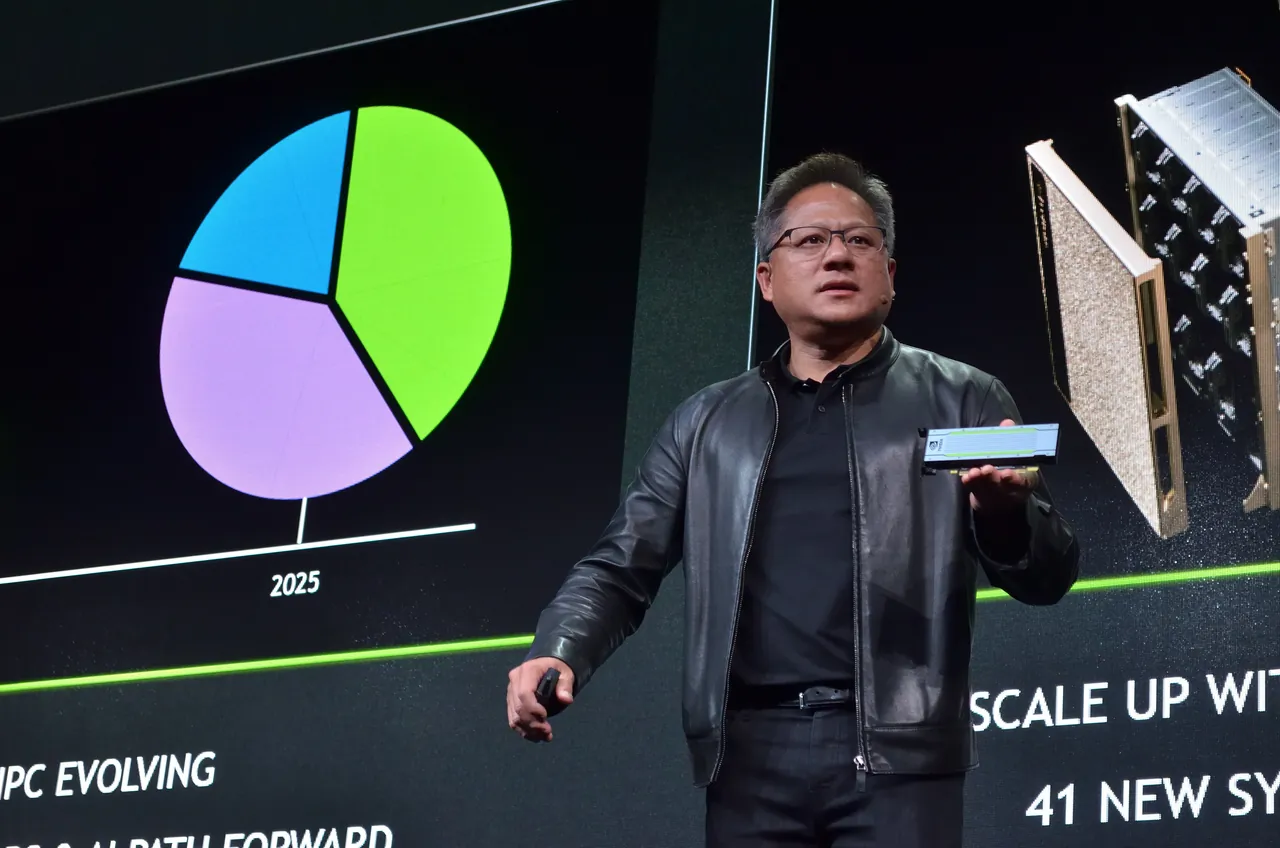
Accelerated computing at SC18
Photographed: 12 November 2018Huang presenting accelerator hardware at the SC18 conference.
Raysonho @ Open Grid Scheduler / Scalable Grid Engine · CC0 · Source record ↗
Resized and compressed; no generative editing.Open larger image ↗
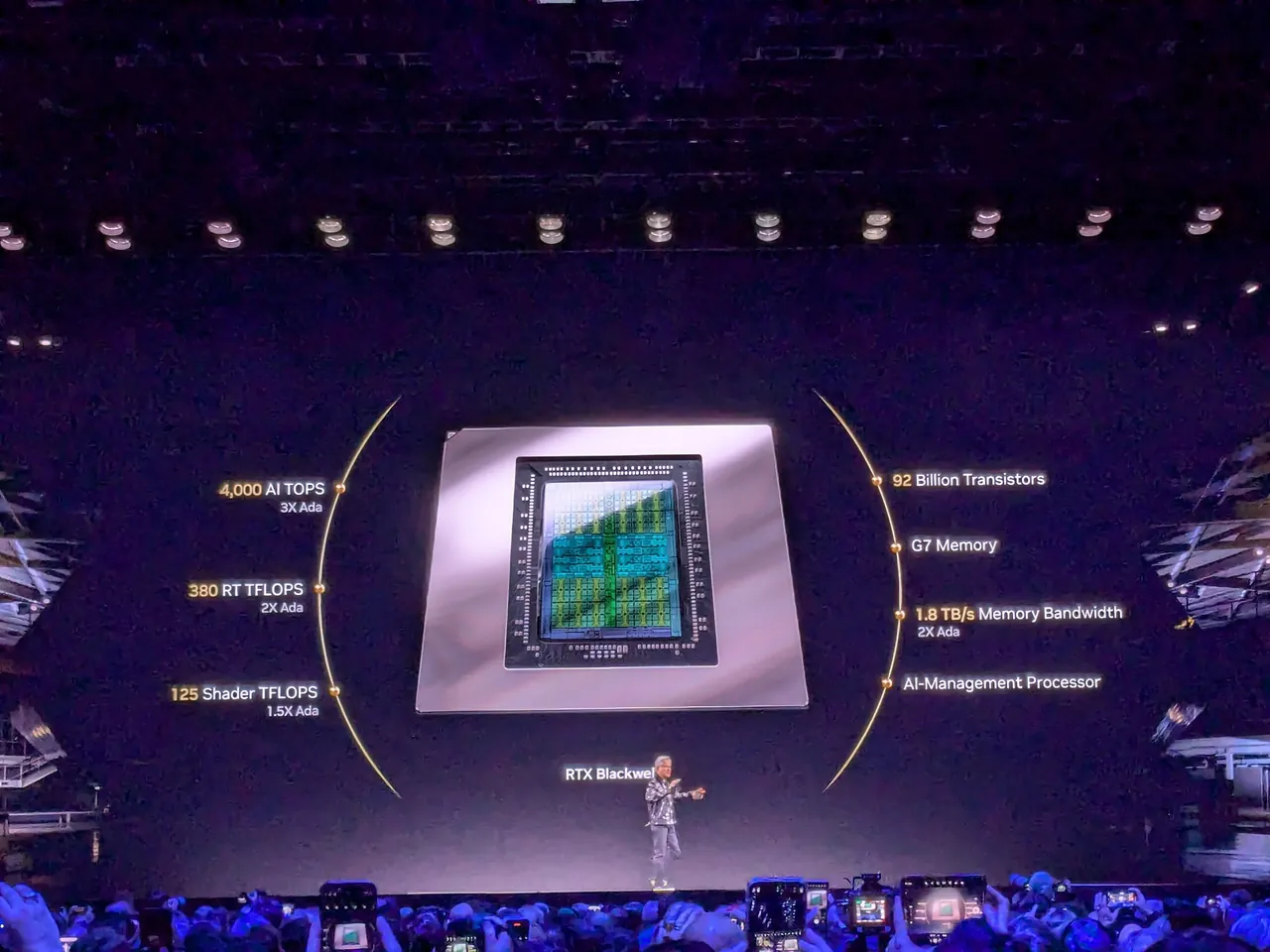
The Blackwell generation
Photographed: 6 January 2025Huang presenting RTX Blackwell at CES 2025. Consumer graphics keynote, not a photograph of an AI data centre.
Pronoia · CC0 · Source record ↗
Resized and compressed; no generative editing.Open larger image ↗
Go to the original sources.
Start with the material behind each milestone. Corporate sources describe NVIDIA’s own history and perspective.
- Reference 1 · NVIDIACorporate timeline
Primary company account of its founding, CUDA architecture and major technology milestones.
Read original source ↗ - Reference 2 · NVIDIA BlogGame-Changer: How the World’s First GPU Leveled Up Gaming and Ignited the AI Era
Published October 11, 2024. Retrospective on GeForce 256, GPU computing and the AlexNet breakthrough. The headline reflects NVIDIA’s own product framing.
Read original source ↗ - Reference 3 · NVIDIA DeveloperCUDA Toolkit archive
Release archive documenting CUDA Toolkit 1.0 in June 2007, distinct from the 2006 architecture announcement.
Read original source ↗
A note on context.
The phrase ‘world’s first GPU’ is NVIDIA’s positioning of GeForce 256, not a claim that graphics acceleration began in 1999. NVIDIA dates CUDA architecture to 2006; its public development toolkit followed in 2007. Product introduction dates and photograph capture dates are different. This page covers technology history, not unverified claims about individuals.
Corrections and additions will be recorded on this page as the research develops.
← Back to the reference library